“A Different Form of Intelligence”
On September 21, 2014, former Vice President Al Gore joined an estimated 400,000 people marching through midtown Manhattan in what was then the largest climate change demonstration in history. The march was timed to build momentum for the UN Climate Summit two days later.
Two days before the march, another gathering took place nearby—one that received far less attention, but may have been just as consequential. At Union Theological Seminary, Gore’s oldest daughter, Karenna, welcomed 200 religious and spiritual leaders from around the world to the Religions for the Earth Conference. The gathering brought an entirely different dimension to the climate crisis, framing it not simply as a scientific or political problem, but as an urgent moral and ethical one.
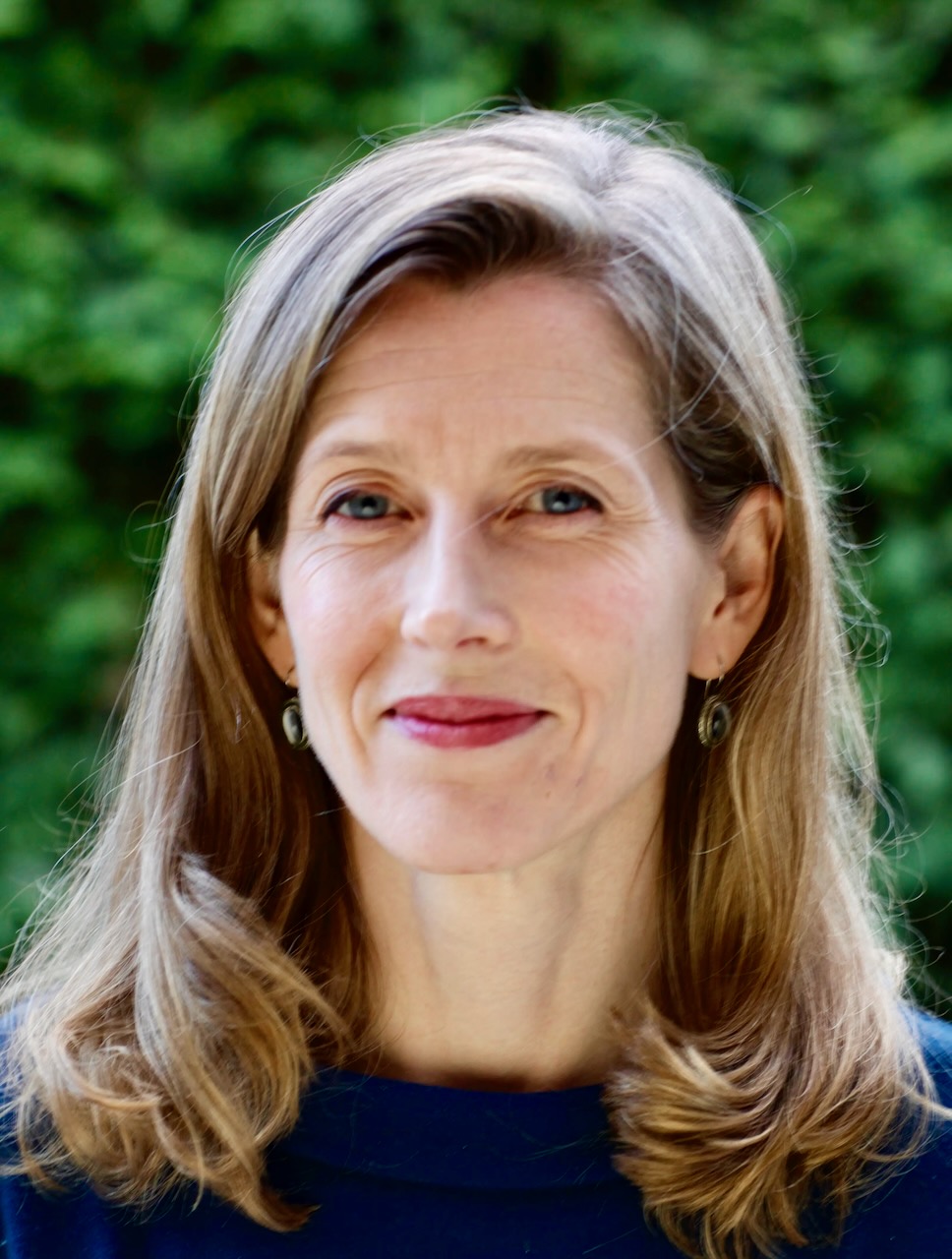
The conference helped inspire the creation of the Center for Earth Ethics, which Karenna has led ever since. But what led her, after growing up immersed in the world of politics, to pursue this very different path?
Justice as a Foundational Value
Karenna was born in Nashville in 1973, and her father was first elected to Congress when she was three. As far back as she can remember the family split its time between Tennessee and Washington, D.C., and attended Baptist churches in both places. She absorbed values of community care, justice, and collective responsibility, and remembers her father teaching her how to pray.
“I remember asking the question, who am I? And who is God? It’s like reaching beyond the absolute limits of human understanding.”

Her environmental awareness developed less from explicit lessons than from experiencing the outdoors on family road trips, especially to Pawley’s Island, South Carolina, where they stayed at a simple cabin by the ocean. “There was a rhythm of nature that one could participate in—sunrise, sunset, wind, waves, etc. I had a deep sense of learning from natural elements and natural beings in the world around me before I had the language to understand and describe it.”
But what she remembers most was the core subject of their family conversations—justice. “We’re a family that cares about justice, about people living in poverty, about racism.”
Personal and Political Disillusionment
After graduating from Columbia Law School, Gore briefly worked as a corporate attorney before moving into nonprofit and social justice work, helping low-income families and survivors of domestic violence.
A turning point came with the 2000 election, when she served as Youth Outreach Chair for her father’s presidential campaign. She introduced him at the campaign launch and the Democratic Convention. “The experience of the campaign was really difficult… it was very emotionally challenging, the process of it, as well as the outcome of it.”
Then came 9/11 and the invasion of Iraq. Suddenly, she recalled, American flags were everywhere and people were severely chastised for questioning the war. “That suppression of criticism made a huge impression on me.”
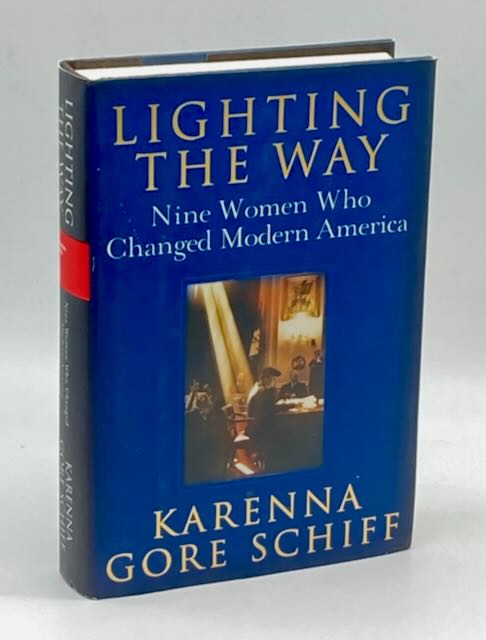
To counter her growing disillusionment, she wrote Lighting the Way: Nine Women Who Shaped Modern America, exploring the lives of women who helped create social change. Among them was Alice Hamilton, a public health pioneer who connected the quality of air, water, and soil directly to human health and well-being. She forged a new field known as “industrial medicine,” exposing the uncounted costs of the Industrial Revolution on human bodies and ecosystems.
The women Karenna profiled—including racial justice advocate Ida B. Wells, labor champion Mother Jones, and farmworker organizer Dolores Huerta—all encountered fierce opposition from those who profited from the status quo. Karenna recognized a familiar pattern, one that mirrored the suppression of dissent and the retreat from concern for the environment and poverty in the years after the 2000 election.
“It was all so troubling to me that I wanted to go to a place that had a sense of moral philosophy and social ethics,” she said. She knew Union Theological Seminary had been a center of movement-building during the civil rights era and saw it as a place to bring her questions and learn how to explore them.
Finding a Language
At Union, she encountered liberation theology, the social gospel, ecofeminism, and environmental justice. She said she came to understand environmental racism and the ways pollution and climate impacts are concentrated in communities whose lives have been systematically devalued. This resonated with her family’s attention to justice.
She also began to see a connection between the treatment of the Earth and the treatment of women and the feminine. “Our assumptions from theology have really put out there this idea of a hierarchy with a male God and human beings and everything goes down the ladder to animals, plants, and the earth itself. And that is a model of thinking that has been deeply ingrained.”
Looking back, Karenna realized that some of what she was discovering at Union had been present in her life much earlier, although she hadn’t known how to articulate it. “There were experiences and insights and feelings that I had from childhood that I didn’t necessarily have language to express.”
One idea in particular began to crystallize: “The ultimate illusion is that we’re separate from nature,” leading us to believe that we can just pillage and pollute nature without any consequence to ourselves.
That realization came into focus in 2014, when Karenna organized Religions for the Earth at Union. Held just days before the United Nations Climate Summit in New York, the gathering brought together 200 religious and spiritual leaders from around the world to address the moral and ethical dimensions of the climate crisis.
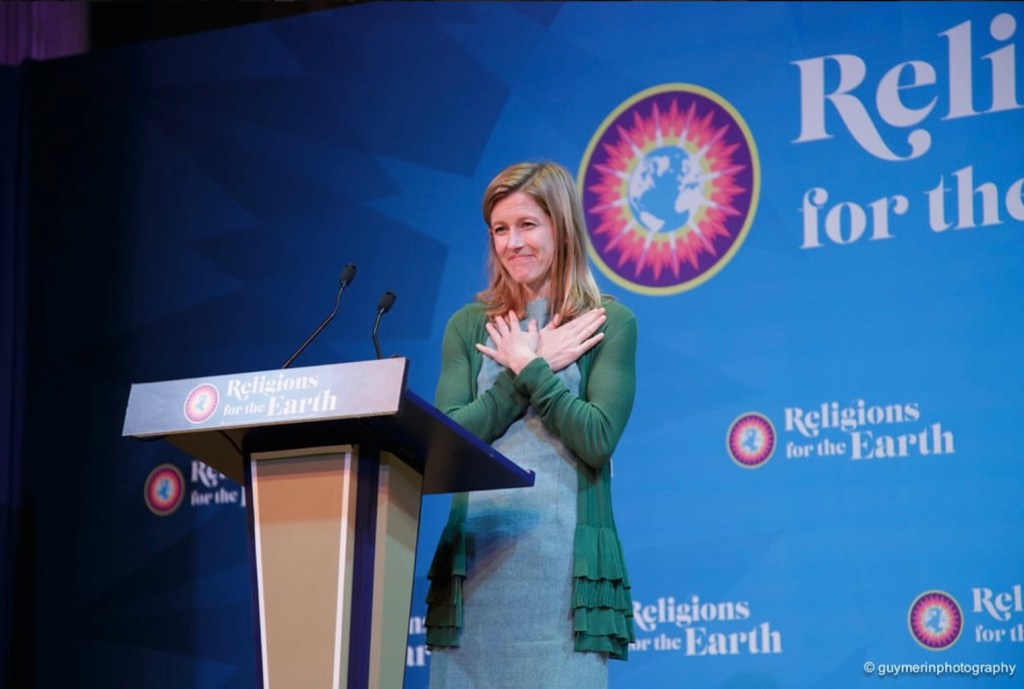
For Karenna, it became something much more than a conference. “It was a real revelation.”
What struck her was the depth and wisdom of diverse spiritual and religious traditions working through questions such as future generations, karma, and divine justice. “I would say more than specific information, I felt moved by a way of thinking and approaching the issues.”
The climate crisis, she realized, raised questions that could not be fully addressed through metrics, economics, or politics alone. The conversation also needed room for questions about meaning, responsibility, spirituality, and our relationship with the rest of life.
A Calling
Religions for the Earth inspired the creation of the Center for Earth Ethics. Karenna doesn’t describe her decision to lead it as a career choice. “I never felt that I made a decision. It was just an obvious pathway that opened that I was given an assignment to do.”
That was a dozen years ago.
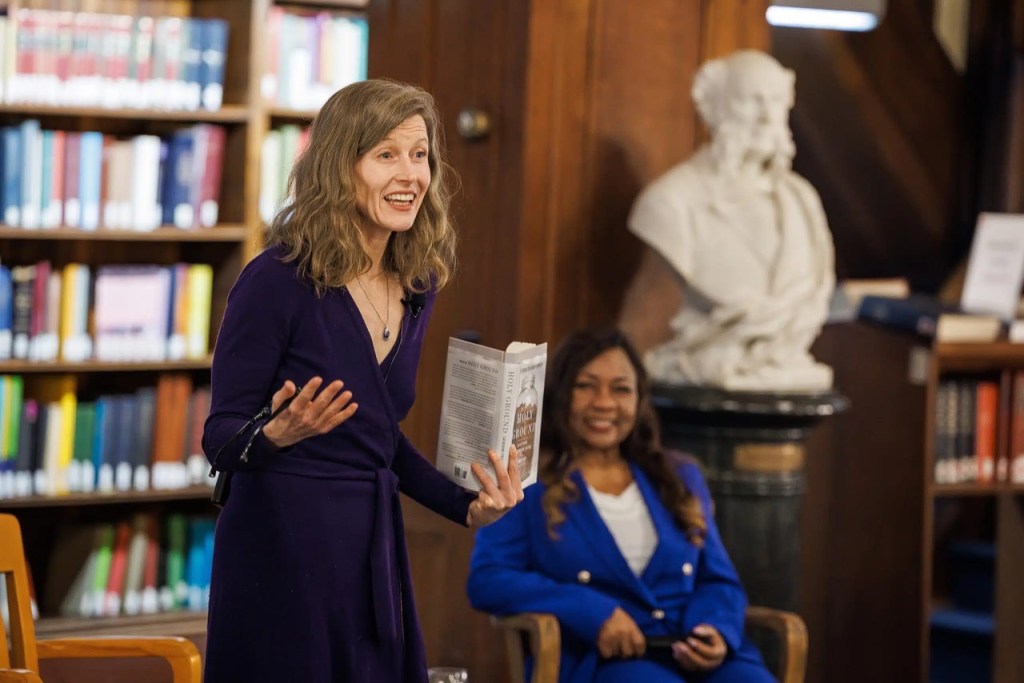
Since the Center for Earth Ethics is fundamentally concerned with our value system, I asked Karenna whether she believes we’ve lost values that are contributing to ecological decline.
“Integrity is the word that comes to mind,” she said.
For Karenna, integrity means living according to a longer-term vision—looking beyond immediate gratification and “whatever you can get away with” and recognizing our responsibilities to family, community, and future generations. She sees something of that ethos in her grandparents’ generation, when there was “a sense of conducting yourself according to a longer-term vision of my life and that of my family and community.”
She has also come to value qualities that are difficult to measure economically: beauty, balance, and harmony. “These are real quality of life issues that we should want for everyone, not just a few people at the top when they’re on vacation or whatever it is. It has to be the way of life for all of us, in order for the whole to feel healthy.”
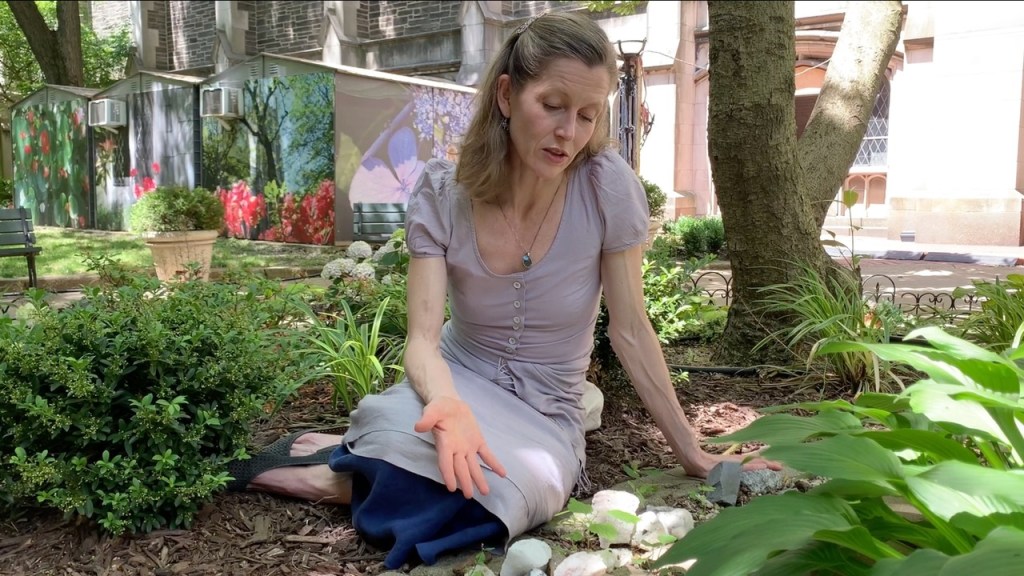
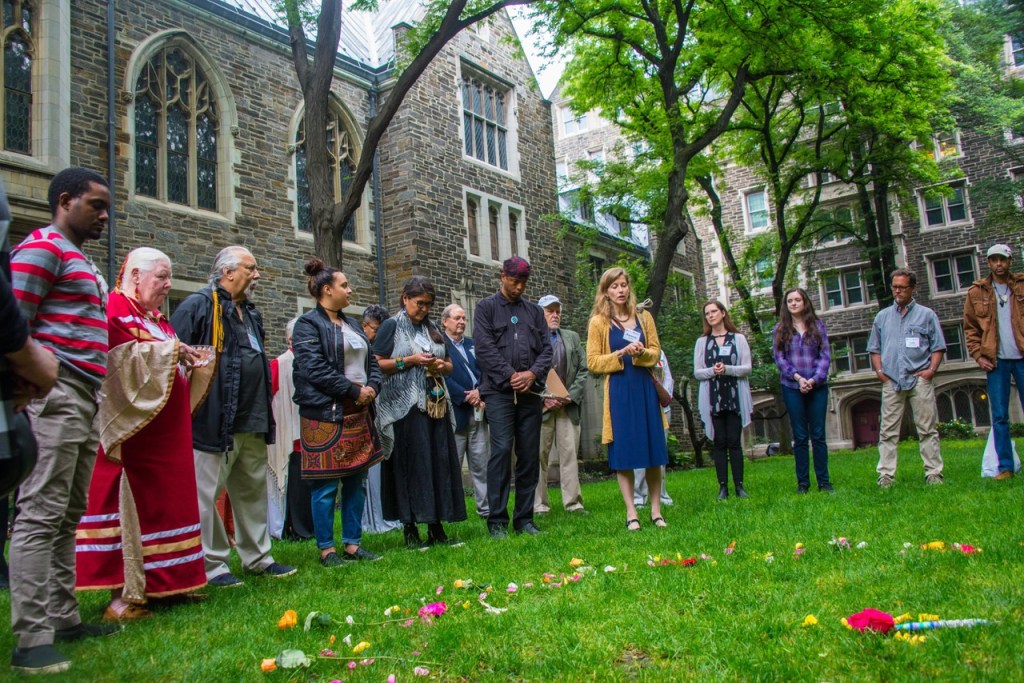
Her work with Indigenous leaders has reinforced her belief that their perspectives can fundamentally change how we understand our relationship with the natural world. She shared a story about a Navajo ceremonial leader who attended the Religions for the Earth gathering. He told her that while the event was good, “we weren’t going to get anywhere until we sat on the ground in a circle.” The circle offered a way to include the natural world in the conversation in a visceral way. “Not token, but actually for real.”
A Different Form of Intelligence
We returned to the fundamental question: what drives her efforts at the deepest level and what has she come to believe?
She said simply: “The intelligence of our species is on trial right now.”
Karenna sees two possible stories unfolding. The first—the one we are currently writing—is what Pope Francis calls the technocratic paradigm. “We are destroying our own habitat and there’s a real possibility that this will be the story that unfolds.”
But there is another possibility. If we are going to change course, she believes it will require a different story—and a different form of intelligence. “It includes spirituality and wisdom and ethics. It includes a holistic sense of who we are and where we are and how we relate to other forms of life.
That is the story Karenna Gore is working to help write. She believes culture, values, and ethos can help us find a way forward that is not only wiser, but “more life-giving, more joyful, hopeful, and can even lift our spirits along the way.”
Resources & Links
Religions for the Earth Conference (2014)
Book: Lighting the Way: Nine Women Who Shaped Modern America (2005)


Leave a Reply