
A “Proactivist”
Lynne Twist is a global visionary, renowned fundraiser, author, nonprofit founder, and speaker. But she calls herself a “proactivist,” meaning an activist for, not against. “I’m drawn by a vision.”
She would count herself as an environmentalist, but weaves that into a much bigger picture about how we live and how we use money. Her work with The Hunger Project, Pachamama Alliance, and the Soul of Money Institute has revealed how interconnected everything is.
What stands out is her passion. It is undeniable. I wanted to understand where it comes from. I found that her philosophies are everywhere—in books, articles, interviews, and videos. But talking with her helped me crystallize it and feel it.
The roots of her passion go back further than I expected.
Childhood and the Loss of Her Father
Lynne grew up in Evanston, Illinois, the third of four children. Her father was a successful big-band leader whose music filled their home. Her mother was deeply involved in civic life, fundraising, and community service.
Then, just before Lynne’s fourteenth birthday, everything changed. Her father died suddenly of a heart attack in his sleep. “The music stopped in my life,” she told me. “The music stopped for all of us.”
In the wake of his death, she searched for meaning. She began attending Mass every day and developed what she now describes as a rich inner life. At the same time, she remained active in school, immersed in leadership, and engaged with the world around her.
Looking back, two strands were already emerging: a deep spiritual search and an equally deep desire to participate in the world.
Those strands would eventually become one.
An Altered Trajectory
After attending Stanford University, marrying her husband Bill, and starting a family in the Bay Area, Lynne found herself living a life that looked successful from the outside. Yet she increasingly felt herself being pulled toward expectations that weren’t truly her own.
“We had to have a BMW or a Mercedes. We had to understand art. We needed to learn about wine,” she recalled. “I was sort of on this track that wasn’t me really.”
A friend introduced her to the EST training, later known as Landmark. The experience helped her step off a path defined by cultural expectations and begin asking deeper questions about purpose and possibility.
Those questions soon led her to an encounter that would alter the trajectory of everything that followed.
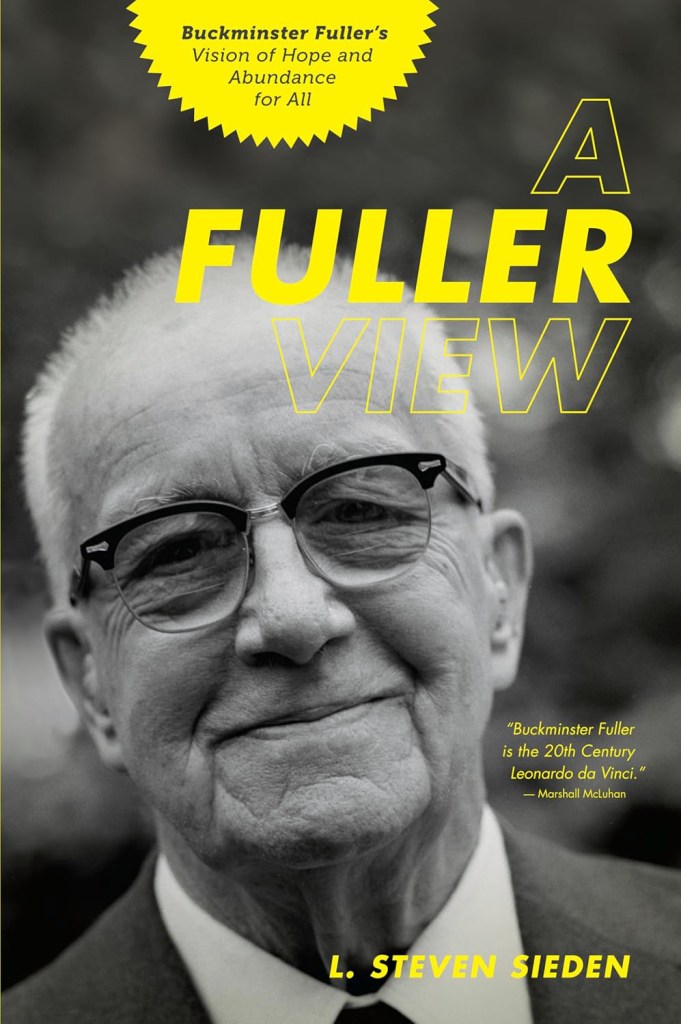
In the mid-1970s, Lynne attended a lecture by Buckminster Fuller at the Marin Civic Center. Sitting among thousands of people, she experienced something she still remembers vividly. “Somehow I felt like he was speaking directly to me about scarcity and sufficiency.” Fuller argued that humanity had crossed a historic threshold: for the first time, there were sufficient resources for everyone on Earth to live a healthy and productive life. The problem was not actual scarcity, but our belief in scarcity.
The idea landed with enormous force. “It was like a transmission,” she said.
That single insight would ripple through every major chapter of her life.
The Hunger Project
Through a series of connections, Lynne helped bring Fuller together with Werner Erhard. Their collaboration eventually led to the founding of The Hunger Project, a mission that would consume the next twenty years of her life.
The work took her to more than fifty countries. She sat in circles with women in Ethiopia. She witnessed drought in Mozambique and Bangladesh. She worked alongside women in India who had been pressured to kill their newborn daughters because daughters were considered burdens. Again and again, she encountered profound suffering—and resilience that was equally difficult to explain.
“You learn about the human spirit and how unquenchable it is,” she told me. She discovered courage, dignity, and possibility in places where outsiders often saw only need.
At the same time, she began noticing connections she had not previously seen. For years, her focus had been almost entirely on people. Environmental issues remained largely in the background. But gradually, a pattern emerged.
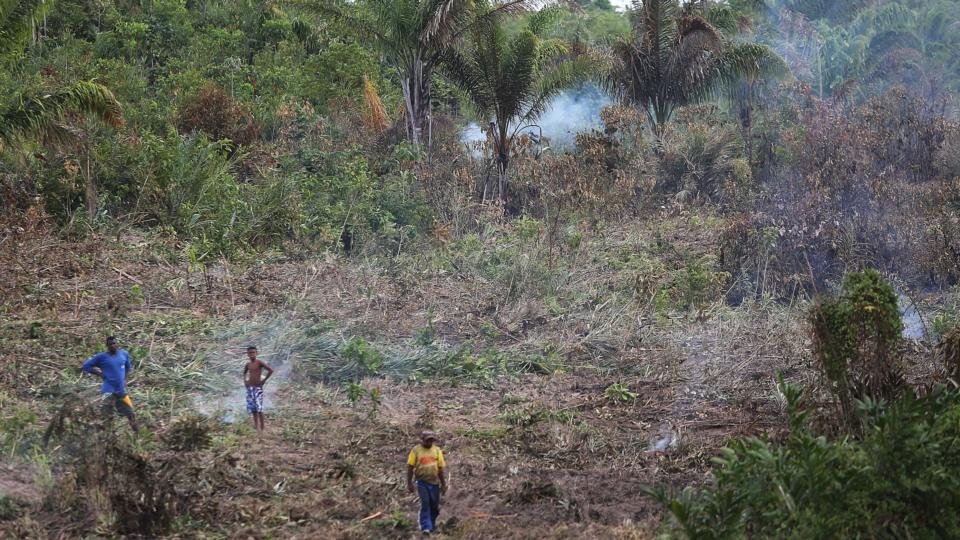
One memory stands out. While visiting Ghana, she sat with elders near the coast. They told her that the barren landscape surrounding them had once been rainforest. “We had everything we needed,” they said. Now the forest was gone. The people were poorer. So was the land.
Suddenly, the connection between environmental destruction and human suffering became impossible to ignore. “I started to realize that hunger was, in many ways, a function of the loss of the natural world.”
The Ecuadorian Amazon and Ancient Wisdom
That insight would eventually lead her to the Ecuadorian Amazon and the Indigenous Achuar people, where she experienced the “magnificence of the forest” and the way they lived in “total reverence” for it. “Things all started to make sense,” she said.
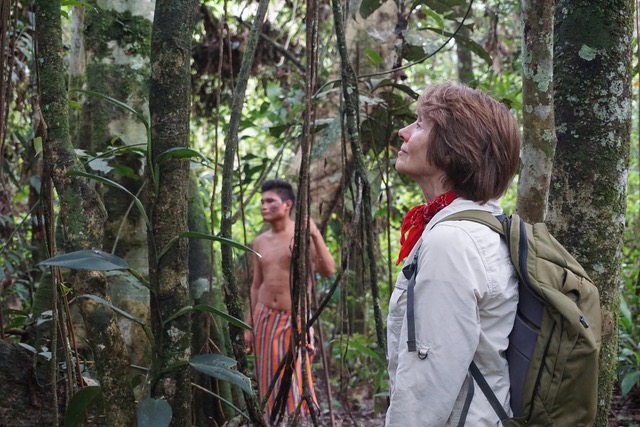
The call from the forest was profound. She realized she could shift from reactive hunger relief to proactive forest preservation.
The Pachamama Alliance was founded in 1996 with a vision that Lynne loves: “A New Dream of humanity: a world that works for everyone—an environmentally sustainable, spiritually fulfilling, socially just human presence on this planet.” Since then, Pachamama Alliance has helped support Achuar efforts to secure title to nearly 1.8 million acres of rainforest and protect the larger Amazon basin.
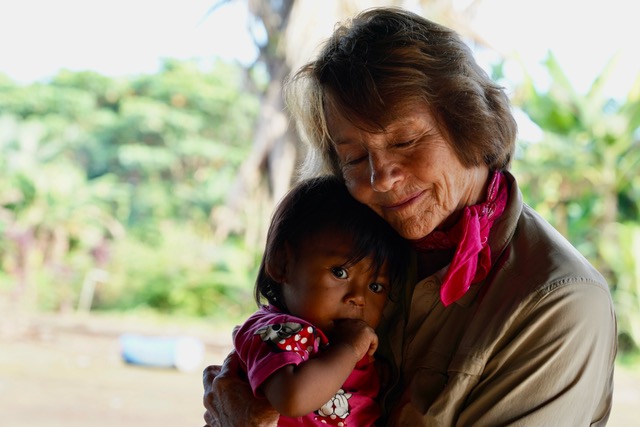
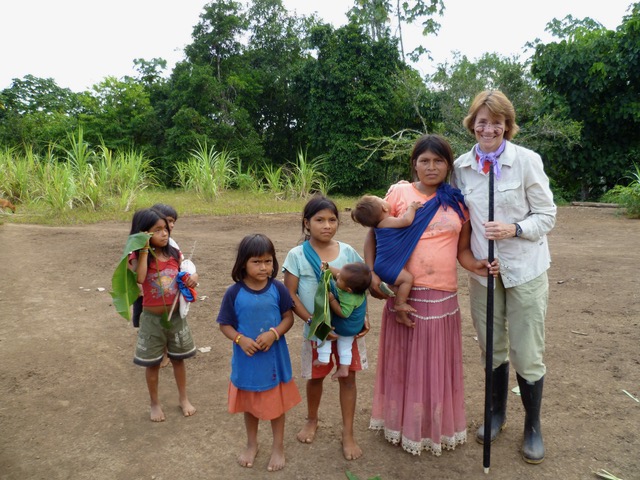
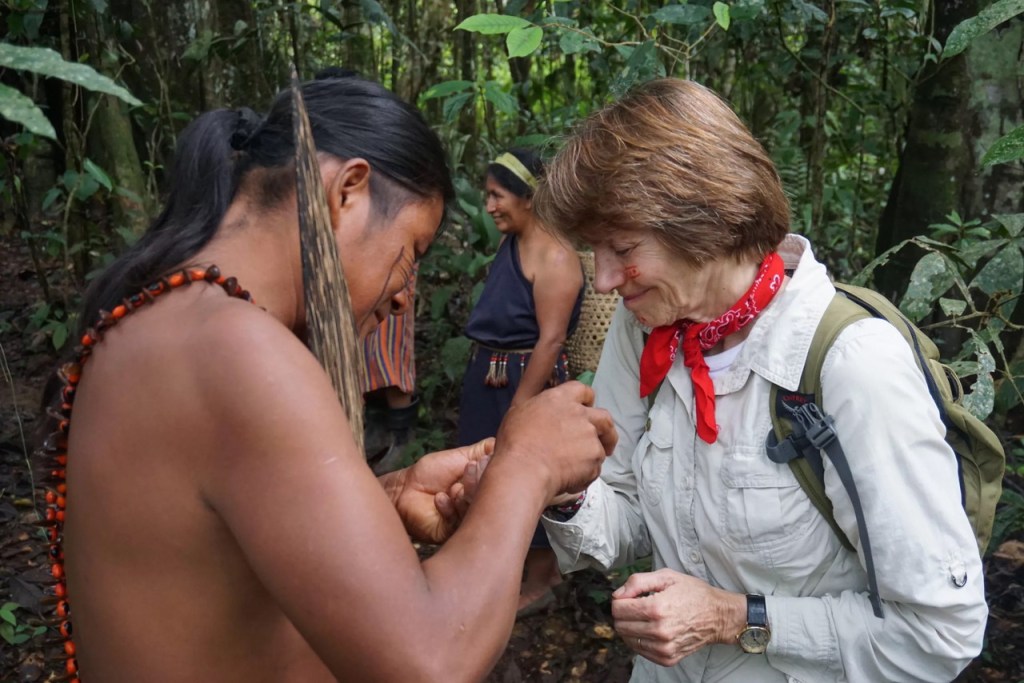
“They never bought into human supremacy,” Lynne explained. “The giant otter is their brother. The kapok tree is their grandfather. The hummingbird may carry the spirit of an ancestor.” These are not poetic metaphors. They reflect a worldview in which “they’re part of the web of life rather than they’re in charge of making sure it’s ok.”
Listening to her describe it, I realized this may be one of the deepest influences on her environmental philosophy. We have forgotten our place within the larger living systems that sustain us.
Scarcity, Sufficiency, and the Soul of Money
Her work eventually expanded to our relationship with money—authoring The Soul of Money in 2003 and starting the Soul of Money Institute, where she explored another consequence of the scarcity mindset she first learned about from Fuller.
Modern culture operates as though there is never enough—not enough money, success, security, or status. That mindset fuels accumulation, extraction, and endless consumption.
But what if there is enough? What if we can transition from “you or me” to “you and me”?
One of the most memorable things Lynne told me was that she wants people to be known not for what they accumulate, but for what they allocate—away from destruction and toward conservation.
“Money is like water,” she said. “It’s a carrier. It can be the currency of commitment and love. It needs to move like blood in the body to support life. Holding onto it deadens us.”
True AI: Ancient Intelligence
Spiritually, Lynne describes herself as “a spiritual being, having a human experience.” She looks for guidance in the natural world—“the trees, the grass, the wind, the sun, the beauty”—as well as in what she calls “ancient wisdom and earth wisdom,” the true AI: Ancient Intelligence.
In her view, hunger, environmental stewardship, philanthropy, social justice, and personal fulfillment are connected by a common question: How do we direct our resources toward life?
Lynne sees the current ecological crisis as a “death-rebirth cycle.” “Every breakdown, no matter how serious, has in it somewhere the seeds of a breakthrough that’s bigger than the breakdown. Whether that’s true or false, it doesn’t matter. It’s the opportunity that you create out of a breakdown that creates the breakthroughs that are the stuff of a committed life.”
Lynne’s Core Driver: Commitment
As our conversation drew to a close, I returned to the question that had guided me from the beginning. What drives her? How does she sustain this level of passion and energy after decades of work?
Her answer was simple. “If the commitment is larger than your own life,” she said, “the commitment pulls you through difficult moments.” She added that commitment is not something you carry. It carries you. It gives meaning to sacrifice. It shapes you into the person required to fulfill it.
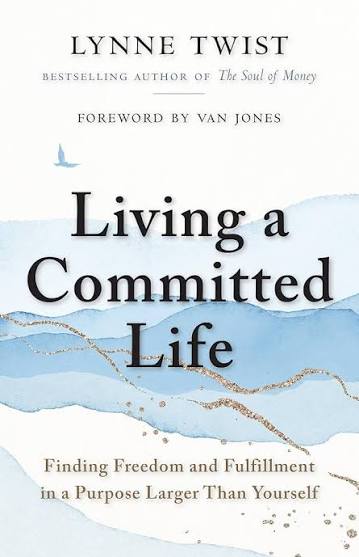
The more I reflected on our conversation, the more that idea seemed to explain everything.
The loss of her father.
The search for meaning.
The influence of Buckminster Fuller.
Twenty years dedicated to ending hunger.
The call of the Amazon.
The work of transforming our relationship with money.
Again and again, her life has been shaped by commitments larger than herself.
Perhaps that is the source of the passion that is so immediately apparent when you meet her.
It is not simply environmental concern. It is the conviction that we belong to something larger than ourselves—and that a life devoted to serving it becomes larger too.
Resources & Links
The Soul of Money Institute
Book: The Soul of Money (2003)
 The Ethos Project
Leave a comment