
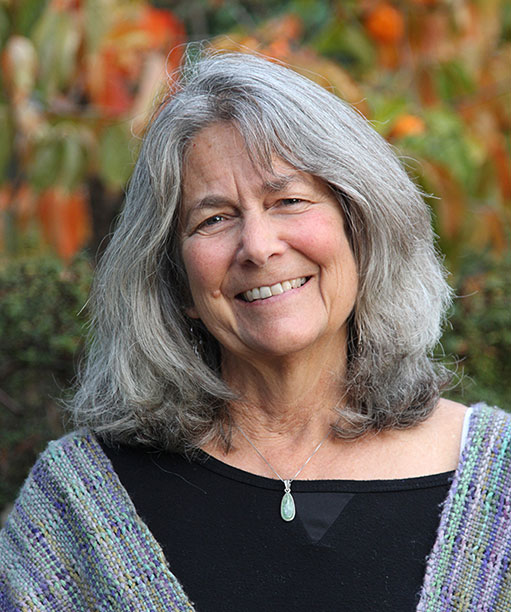
An Unshakable Devotion to Cougars, Animals, and Life
Most of us feel a pang of sadness when we see an animal suffer. Sharon Negri feels something stronger—an ache that moves through her entire body. That difference has shaped her life.
In her twenties, after hearing about the brutal realities of mountain lion trophy hunting, she vowed to stop it. That was more than 40 years ago, and she hasn’t stopped since. Today she is one of the most respected voices in the country for protecting mountain lions and showing why they matter.
I’d heard from several people about her remarkable devotion and wanted to understand what fuels it. Our conversation revealed where her extraordinary empathy for animals began—and how it became her life’s work.
The seeds of her empathy
Sharon grew up in the San Fernando Valley, north of Los Angeles. Her parents divorced when she was six, so she alternated between two households and two lifestyles. Her mother and stepfather lived a comfortable life built around a golf course. Her father, a California State assemblyman, pulled her outdoors: camping, water-skiing, and campaigning. “I remember attending Democratic parties, knocking on doors, and sitting on my dad’s lap on the Assembly floor.” Her upbringing made her equally at ease in political halls and on riverbanks.
Her empathy for animals began with her dog, Sandy. “We went for long walks and he gave me comfort. I could feel his compassion for me when I was sad.” She came to see him not as a pet, but as a sentient being with feelings and thoughts. “I became deeply curious about what he was thinking.”
Two early experiences opened her eyes to animal cruelty. At nine, while fishing with her grandfather, she watched a fish struggle on the hook. “If you catch a fish, you have to eat it,” he told her. The distress she saw in the fish was horrifying to her. “I began to realize how sensitive I was to animal suffering.”
At fifteen, she witnessed a cow being shot, butchered, and hung, while pigs were castrated without anesthesia. She remembers the screams and the farmer’s detachment. She stopped eating meat that day. Her experiences were beginning to shift her values.
Becoming an environmentalist
The summer after high school, Sharon sat in on a UC Santa Barbara class with environmental historian Rod Nash. That inspired her to apply for an internship at the Planning and Conservation League (PCL), California’s oldest environmental lobbying firm. “The day I started, I realized this is what I wanted to do with my life.” At PCL she tracked legislation, lobbied legislators, and suddenly found herself in the center of California’s forestry and marine debates. She later transferred to UC Davis to study environmental planning and policy while continuing her internship.
At 22, she was unexpectedly put in charge of PCL when the director left. “I had never run an organization, no less a statewide organization, and literally had to learn by the seat of my pants. Fortunately, I had a lot of support from mentors and professors.”
The moment everything turned toward mountain lions
After graduation, Sharon traveled to Africa with her then-husband, Mark Dubois, founder of Friends of the River, to explore a long-held dream of protecting wildlife.
In Kenya, they stayed with renowned zoologist Iain Douglas-Hamilton and learned about the slaughter of elephants. Hearing their stories intensified her desire to pursue wildlife conservation. Later, she heard thrashing inside a crate on a truck—a young elephant whose mother had been poached. “I was horrified, heartbroken. It strengthened my resolve.”
But what ultimately changed her life happened back home.
Upon returning to California, she met with Judge Bill Newsom, father of now-Governor Gavin Newsom, about a potential job. Instead, he described attempts by sportsman and ranching organizations to lift the moratorium on mountain lion trophy hunting and explained how lions were hunted: chased by hounds until exhausted, forced into a tree, shot in the paw so they couldn’t escape, then held for days until a wealthy client arrived to shoot them point blank. “Just for a trophy on the wall,” she said, still distressed in retelling it.
Click on the play button below to hear Sharon describe it.
“That was the moment,” she told me. “Everything I’d seen in Africa—the cruel killing of animals—I realized could happen in my own backyard.”
She was swept instantly and permanently into mountain lion protection.
The long fight—and the toll
After a few years of fighting efforts to reopen trophy hunting, Sharon and her colleagues established the Mountain Lion Foundation in 1986, and she became its first director.
She came to understand that wildlife management was dominated by what she called “the iron triangle”—hunters, ranchers, and agencies—groups that often protect their shared interests at the expense of ecological concerns or public input.
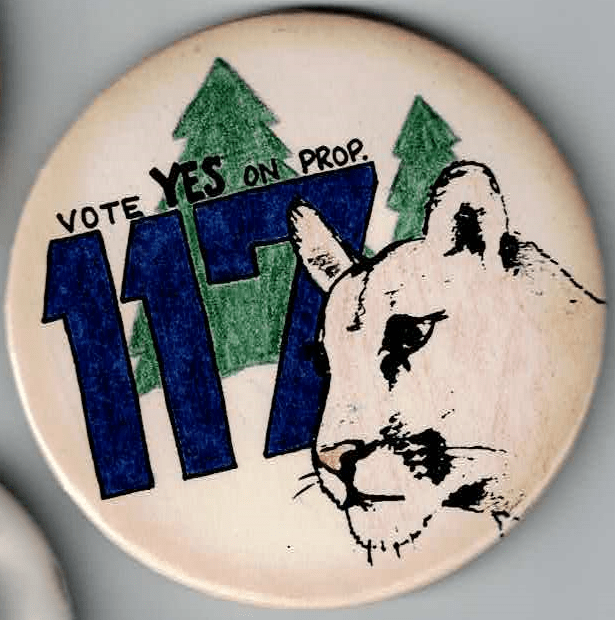
To bypass the system, Sharon joined a steering committee of experts to draft an initiative and bring the issue directly to voters. In 1990, Californians passed Proposition 117, permanently banning mountain lion trophy hunting and creating a $30 million-per-year Habitat Conservation Fund—one of the most significant wildlife victories in state history. As of 2010, more than 2.2 million acres of wildlife habitat had been protected by the proposition, and Governor Gavin Newsom extended the ban an additional 10 years, until 2030.
But the effort came at a cost. Sharon said she experienced extreme burnout. After the campaign, she developed neurological symptoms and had to step back. Her life had become nonstop work with no time for renewal. “Nature needs diversity to thrive,” she said. “And I’m no different.”
A new path: supporting others
A new path revealed itself during the campaign. “I received a lot of calls about the statewide initiative asking, ‘How did you do it?’ I ended up spending hours helping nonprofits develop strategies to protect wildlife in their state.”
She realized she could advance mountain lion protections more effectively by equipping organizations with tools and guidance, creating a ripple effect far beyond what one group could do. With that awareness, she founded WildFutures in 1994, a project of Earth Island Institute, to support large carnivore conservation, especially for mountain lions.
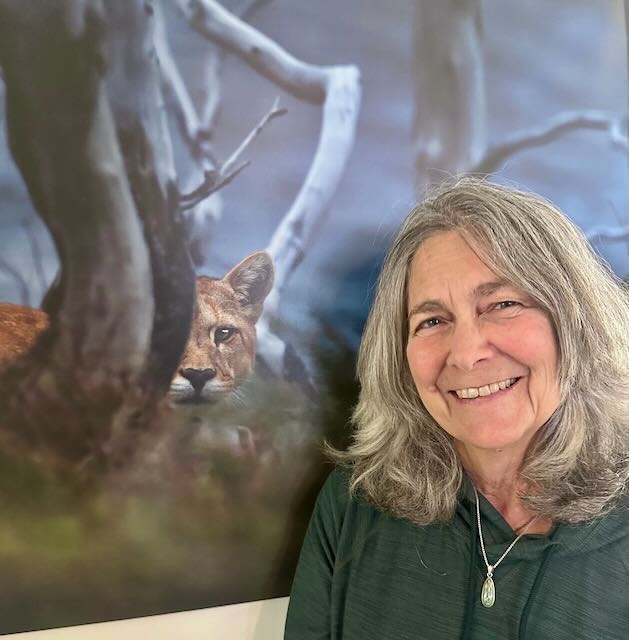
Over the years, she built coalitions, developed outreach materials, trained nonprofits, and helped direct donor funding toward organizations addressing climate change, species loss, and environmental injustice.
She produced many respected publications and films, including On Nature’s Terms (2001), Cougar Ecology and Conservation (2009), and The Secret Life of Mountain Lions (2016). She also served as co-director of the Grizzly Bear Outreach Project and co-founded the Wild Felid Research and Management Association.
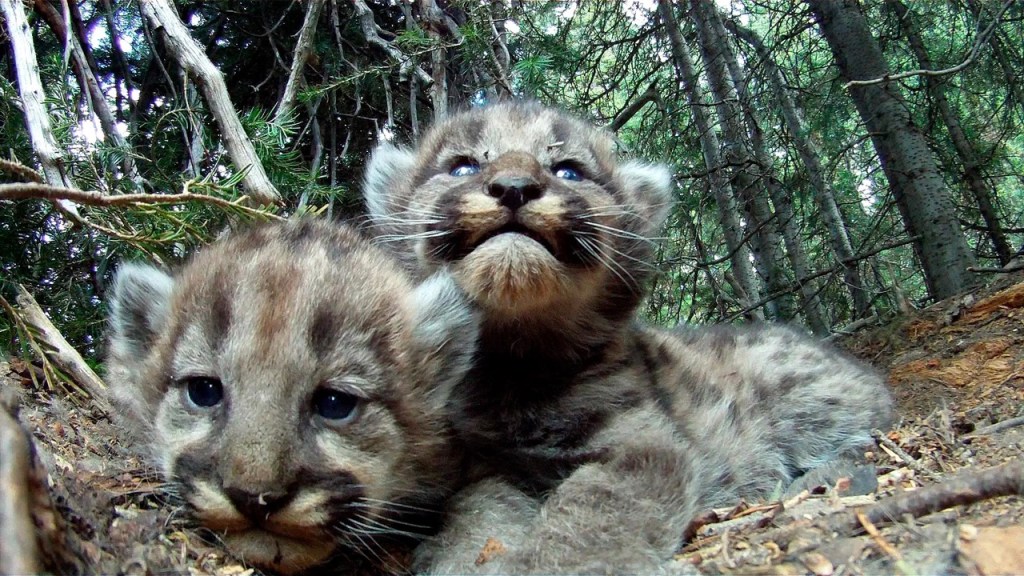
Her work deepened again when she developed an Activist Resilience Survey for Earth Island Institute, which led to six years of leadership programs. She began coaching environmental leaders, helping them navigate burnout, purpose, and grief.
What drives her
After more than 30 years leading WildFutures and 40 years fighting for carnivores, I asked her what sustains her incredible devotion. Three things stood out:
The sentience of all life. She uses the word sentient often. “Animals can feel stress and pain, and can have social lives critical to their survival,” she said. “They have an important role and a right to exist.”
A moral compass that refuses to bend. She said she experiences moral injury from animal cruelty, environmental harm, and injustice. “That injury motivates my moral compass to right things I know to be wrong. And it has shaped my values, expanded my compassion, and given me purpose.”
A commitment to science and democratic process. She strongly believes wildlife decisions must be grounded in evidence-based science and shaped by democratic processes that reflect diverse interests and protect long-term ecosystem health. “I value democratic processes, freedom from oppression and cruelty, as well as compassion and justice for all living beings.”
Where she stands now
“After decades devoted to wildlife protection, I’ve come to understand that working on issues I care about has been an elixir to my despair.”
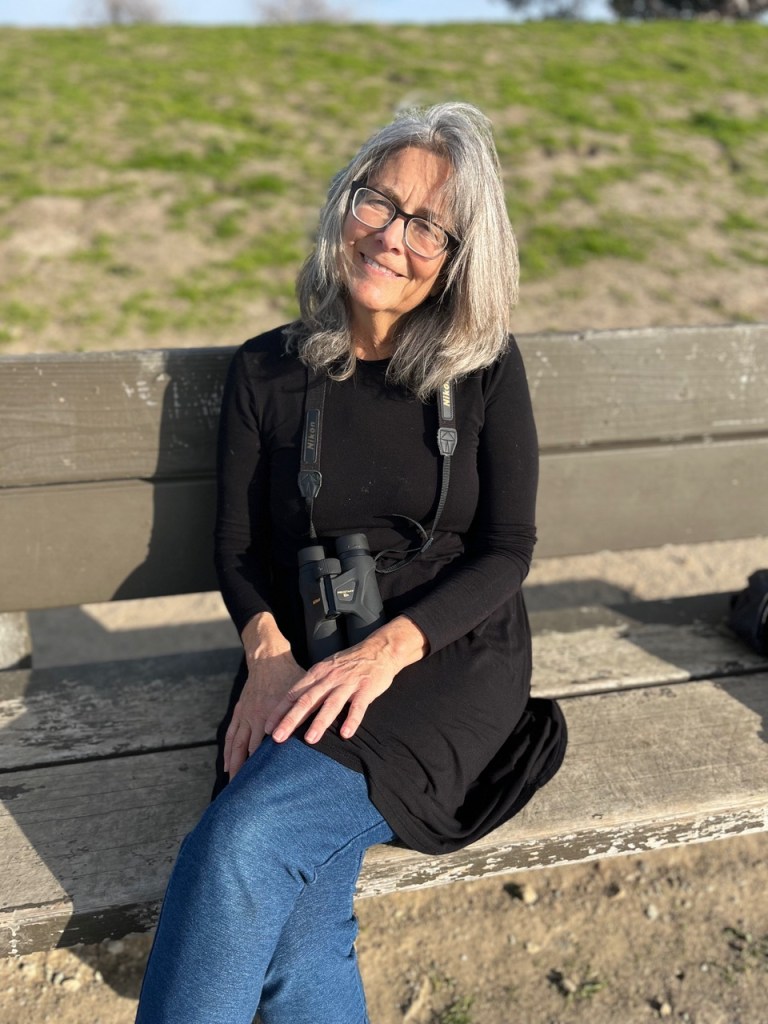
Now at 66, she said she’s in a new phase of life. “Although I will continue to mentor activists, guide funders, and protect wildlife, I also realize that I need a healthy ecosystem to thrive. I plan to spend more time outdoors in places I love, and less time tethered to my computer and phone.”
Sitting with Sharon, it’s impossible not to be moved by her love for wild places and wild animals. It left me feeling that empathy and understanding for all forms of life aren’t just nice-to-haves—they’re fundamental.
Resources & Links
WildFutures
Earth Island Institute (fiscal sponsor of WildFutures)
On Nature’s Terms – People and Predators Coexisting in Harmony (PBS film, 2001, 26 minutes)
The Secret Life of Mountain Lions (2016, 6 minutes, Spanish & English)
Cougar Ecology and Conservation (edited by Maurice Hornocker and Sharon Negri)
International Cougar Management Guidelines: Processes for Collaboration and Implementation

 The Ethos Project
Leave a comment