Fighting for Equity Through Climate Action
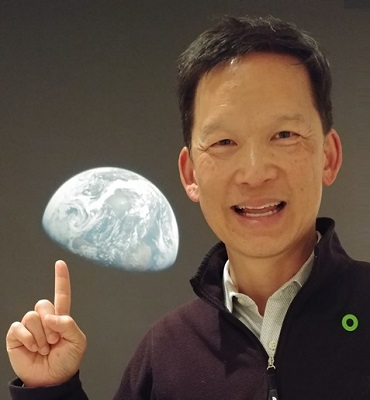
“I’m not an environmentalist,” Wei-Tai Kwok insists. And yet, since seeing An Inconvenient Truth in 2006, he has devoted himself almost entirely to addressing the climate crisis—launching a second career in renewable energy, giving more than 180 climate presentations, co-founding the Climate Reality Bay Area Chapter, electrifying his home, and hosting workshops to help others do the same. His dedication earned him a feature in The Inconvenient Sequel book and a Green Ring Award from former Vice President Al Gore in 2018.
So if he’s not an environmentalist, what is he? And what drives him—at the deepest level—to spend hundreds of hours trying to be part of the solution?
Grateful to Be American
Wei-Tai’s story begins before he was born, with his mother fleeing communist China and becoming a stateless refugee in the Philippines. Unable to gain citizenship there, she was eventually sponsored by a Catholic church in Pennsylvania to come to America. His father, also from China, shared a deep gratitude for the country that gave him refuge.
“My parents felt America provided the opportunity for a wonderful life,” Wei-Tai recalled. “And because of that, giving back has always been central to our family values.”
But, growing up as a Chinese American family in a largely white, Christian suburb of Virginia in the 1960s and ’70s, they didn’t quite fit in. They were agnostic, without a formal religious tradition, but Wei-Tai believes they were shaped by Confucian values—family, social harmony, and the greater good over individualism. Although they didn’t attend church, his parents were very civic-minded, volunteering and serving as leaders in PTAs, music associations, and community boards.
Wei-Tai recalled, “My dad was really patriotic. He worked at the Veterans Administration his whole career, and we always looked forward to any day—like the Fourth of July—when we could put the flag out.”
That gratitude also extended to the land. He and his parents kept a vegetable garden, through which he absorbed a simple but enduring lesson: the earth sustains us.
Awakening to Responsibility
Wei-Tai’s first brush with energy issues came in high school during the energy crises of the 1970s, when he joined the debate team and argued in favor of solar energy over fossil fuels. He couldn’t have imagined then that he’d end up working in renewable energy decades later. With his civic-minded drive, he assumed he’d make a difference as a lawyer or perhaps a politician.
Instead, he found himself in San Francisco in the 1990s, starting and running a successful marketing agency that rode the rise of the internet economy. By the turn of the millennium, he had achieved the American dream of owning a home and raising a young family.
Then came September 11, 2001. Watching the planes hit the Twin Towers, Wei-Tai was deeply shaken. “I kept asking myself, why do some people hate America, a country I love so much?” As he searched for answers, he concluded that America’s oil addiction had empowered tyrannical regimes, fueling suffering and desperation that could turn against America as a symbolic target.
“I felt America needed to address the root causes of terrorism, not just beef up airport security,” he said.
A Moral Crisis
That insight deepened a few years later when he saw An Inconvenient Truth. His view expanded beyond geopolitics to a planetary moral crisis. “It’s unethical,” he said simply. “Can we continue business as usual, or must we change course?”
After seeing the film, every night while brushing his teeth, he asked himself, What did I do today to be part of the solution? And every night, the answer was the same: nothing.
In 2007, he reached a breaking point. He could not continue business as usual. He sold his marketing firm and posted on LinkedIn that he was seeking opportunities in renewable energy.
Becoming Part of the Solution
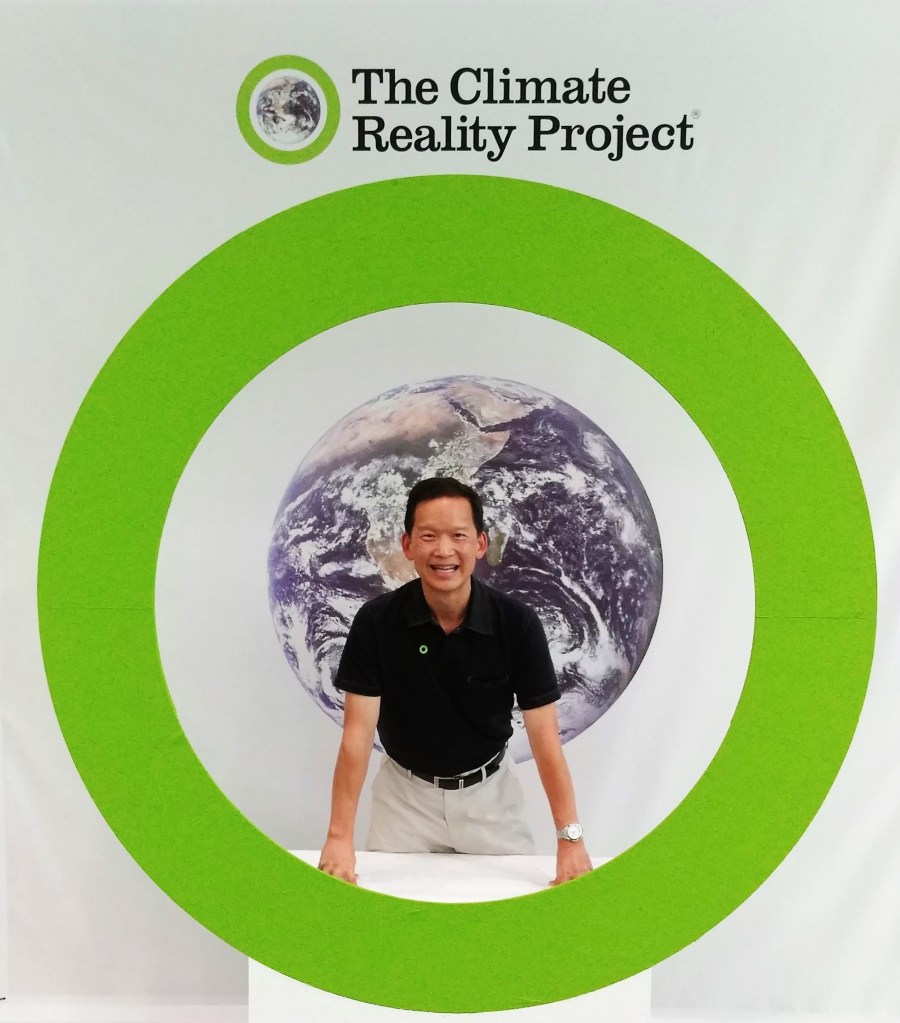
A former boss connected him with Suntech Power, which soon became the world’s largest solar company. Wei-Tai joined as head of global marketing, launching a second career that continued through NRG and several other clean energy ventures.
Still, after four years in the industry, he noticed something troubling: global emissions were continuing to rise. Working in renewables wasn’t enough. In 2013, he stepped away from other nonprofit commitments and attended a Climate Reality training led by Al Gore. He began giving presentations wherever he could—schools, Rotary clubs, corporations, even hair salons—always starting with his personal story, including his moral crisis and his half-joking sense of being “doubly guilty” as a Chinese American, given that roughly 45% of global emissions come from the U.S. and China.
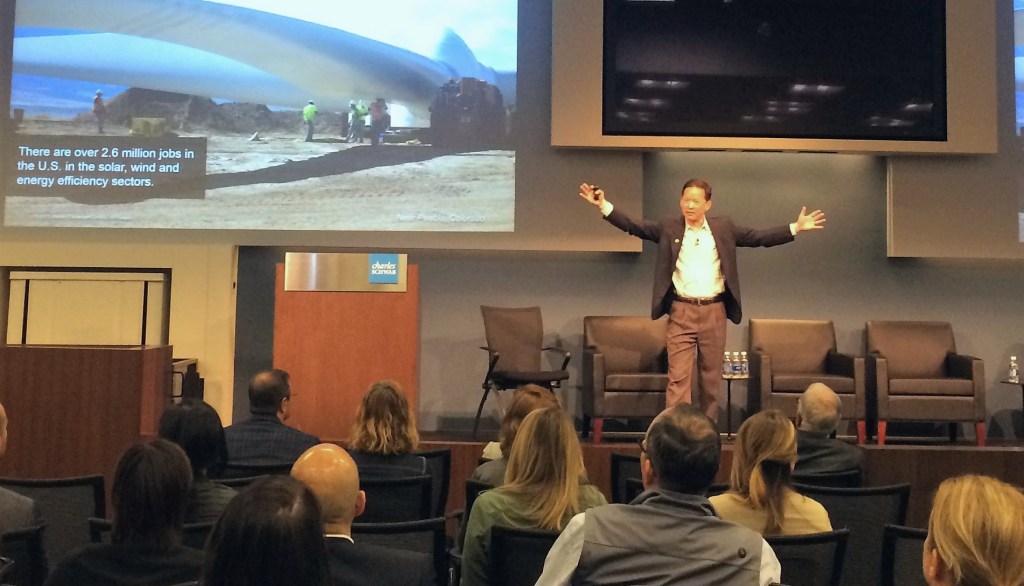
Beyond presentations, Wei-Tai helped catalyze local action by organizing climate leaders in San Francisco, leading to the formation of chapters across the country and the co-founding of the San Francisco Bay Area Chapter, which became the largest in the U.S. In recognition of his efforts, he received a Green Ring Award from Al Gore in 2018.
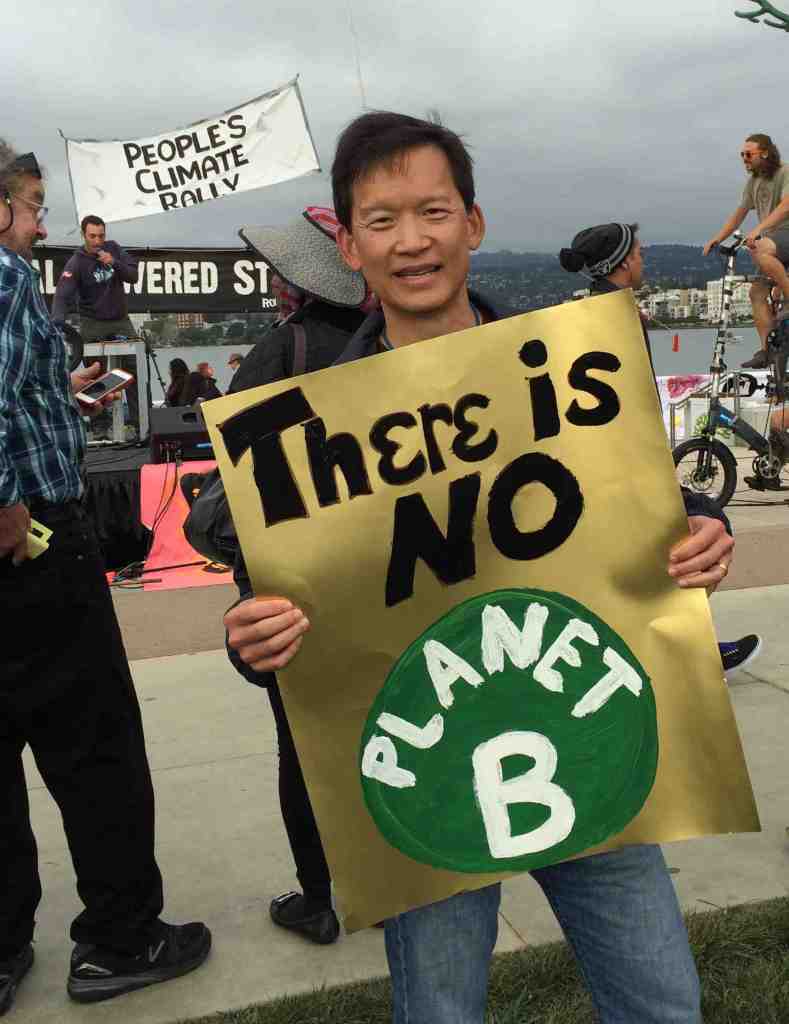
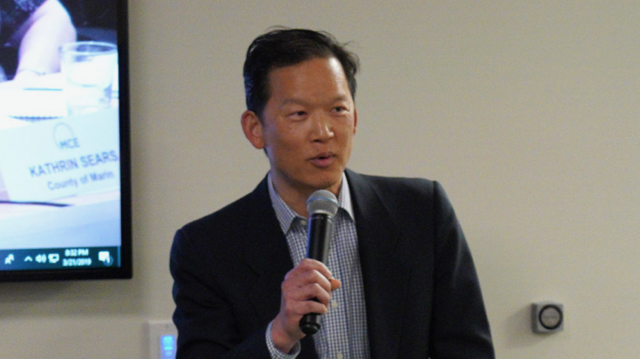
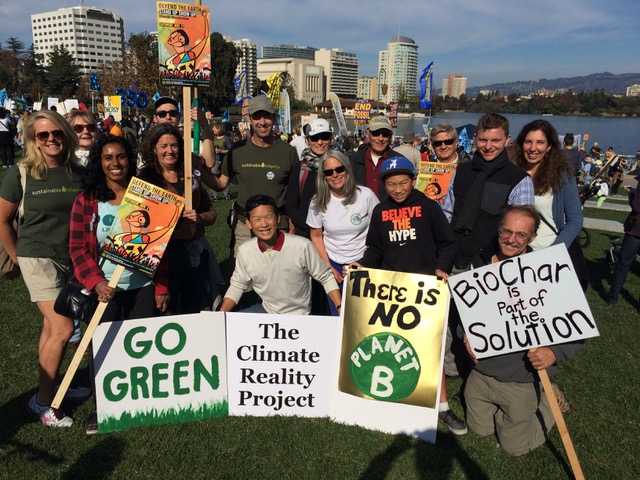
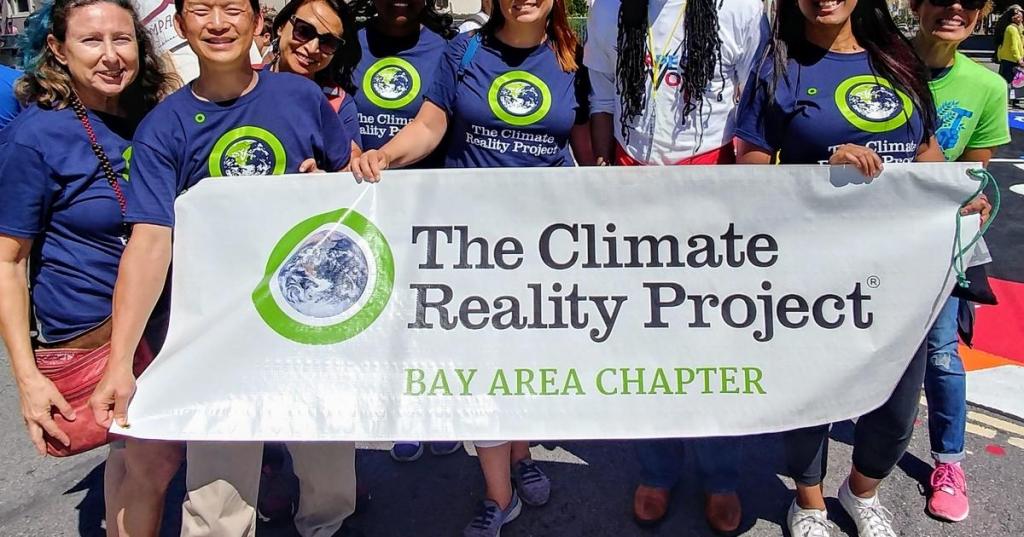
Wei-Tai acknowledges there have been ups and downs in renewable energy, but he remains optimistic. “For the last 20 years we’ve been trying to beat the cost of fossil fuels. Now solar is the cheapest source of electricity nearly everywhere. The next 20 years will be absolutely amazing.”
Living the Solution
Wei-Tai also felt compelled to align his personal life with his values. While he had already installed solar panels and leased an electric vehicle, fully eliminating fossil fuels from his home initially seemed unrealistic—until he realized that heat pumps were widely used technologies he had seen in Asia.
After attending an Electrification Expo in Berkeley in 2019, he and his wife concluded that converting their home to be fully electric was feasible. They completed the transition in just 45 days.
“I didn’t want to do a good deed in silence,” he said. He documented the process in painstaking detail and began hosting workshops at his home. To date, roughly 260 people have attended the popular sessions, both in person and online. “I believe in experiential learning,” he added. “People need to see, hear, and touch the solutions to feel comfortable with the change.” (link to YouTube video below)
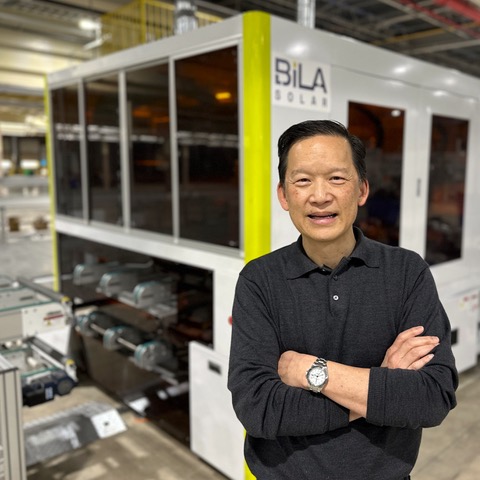
By any reasonable measure, Wei-Tai is doing everything he can think of to confront climate change.
The Deeper Why
When asked what drives him, Wei-Tai’s first answer comes quickly: his children. They were six and nine years old when he saw An Inconvenient Truth. He realized the world didn’t have a century to solve this problem—perhaps only 30 or 40 years. “It will be too late for them to fix it,” he said. “Once you see that truth, you can’t unsee it.”
<Wei-Tai explains his motivation in the video below>
He added, “Could I face my children 20 years later, with them asking what I did when I knew this was happening? Nothing?”
That concern extends beyond his own family. He recalled being scheduled to give a climate presentation at a Kiwanis Club meeting following the awarding of a scholarship to a Chinese high school student, dressed proudly in a suit and surrounded by family. “They kept saying, you’ve got a bright future ahead of you,” Wei-Tai said. “And I just started tearing up, thinking I’m about to talk about the climate crisis… in my head, I thought this boy doesn’t have a promising future if we don’t do something about it.” It was deeply personal because the boy reminded him of his younger self—and of the intergenerational responsibility we carry.
Wei-Tai also said Pope Francis’ climate encyclical, Laudato si’ resonated with him. “I appreciated how he spoke of our moral responsibility not just to all humans around the world, but also to all other animal and living species, and future generations.”
A Humanist Ethic
Wei-Tai describes himself as deeply spiritual, though not religious. “I’d call myself a humanist,” he said. “I believe in equity and fairness. I’m fighting for the betterment of the human condition.”
To him, renewable energy isn’t just cleaner—it’s more just. It decentralizes power, reduces suffering, and creates the possibility of a fairer world.
People often assume environmentalists are motivated by a love of nature. Wei-Tai’s motivation runs differently. It is rooted in a potent combination of gratitude, patriotism, ethics, equity, fairness, and responsibility to future generations.
As a Chinese American whose parents believed deeply in this country, he wants his children to inherit the same America his parents believed in—one worthy of admiration, responsibility, and moral leadership.
Somewhere, Confucius is smiling.
Resources & Links
Climate Reality Project & Bay Area Chapter
Climate Reality Leader Spotlight: Wei-Tai Kwok (YouTube video)
Home Electrification Tour with Wei-Tai Kwok (YouTube video)
Wei-Tai’s detailed story about electrifying his home..
Bay Area climate heroes around us: Meet Lafayette’s Wei-Tai Kwok
 The Ethos Project
Leave a comment