
From a Past of Extraction to a Future of Regeneration
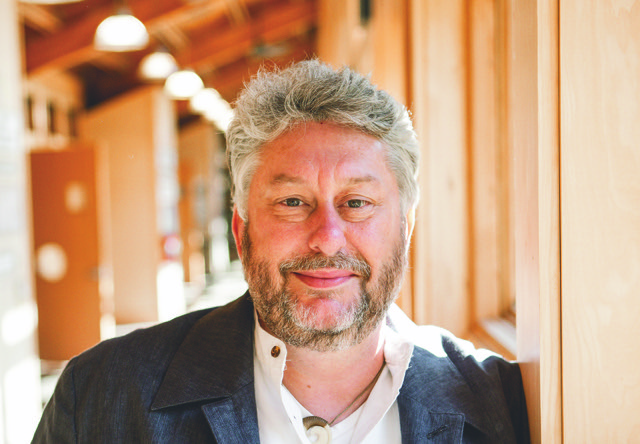
Jason F. McLennan is one of the most influential figures in sustainable architecture, the creator of the Living Building Challenge and a catalyst behind some of the greenest buildings on the planet. He lives here on Bainbridge Island, where we both call home, yet his work and impact stretch around the world. But what I wanted to understand was why. What is the deeper engine behind his lifelong environmental mission? In November 2025, I sat down with him to find out.
Early Influences
Jason grew up in Sudbury, Ontario, one of the most environmentally devastated regions in Canada at the time, yet also surrounded by beautiful lakes and hills. His parents, a professor and a nurse, instilled curiosity, humility, and a love of learning. Books were everywhere. There were canoe trips, camping, skating, and skiing. He said his five aunts were also important influences; they were eccentric, creative, and fiercely independent. “The first vegetarian I ever met was my Aunt Sylvia,” he said. “She wouldn’t even kill a mosquito. She converted two of my sisters.”
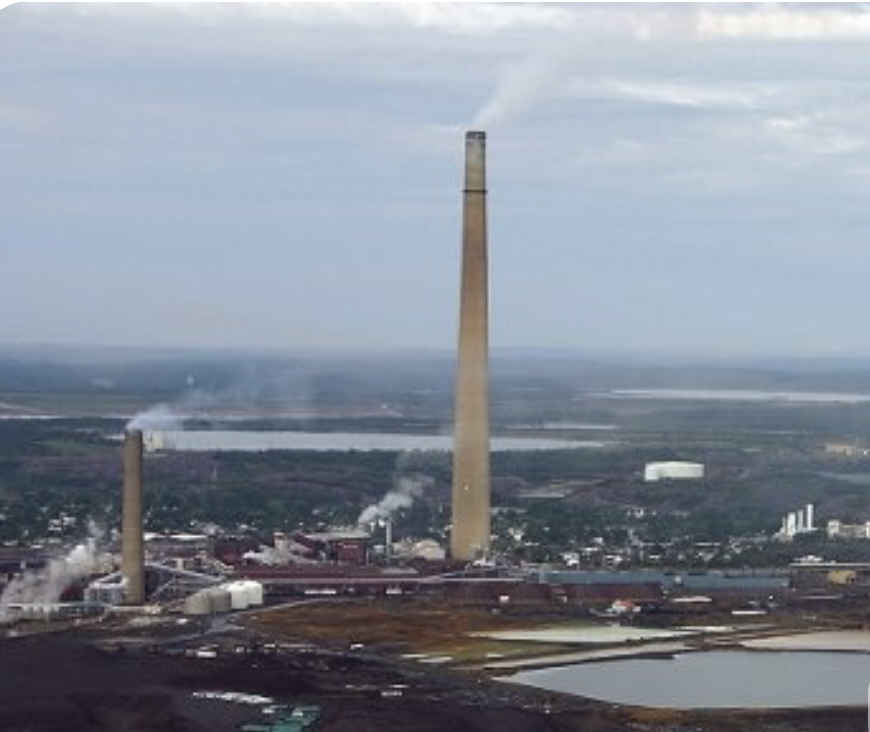
But outside the warmth of his home life, Sudbury was stark. Mining had left huge swaths of the landscape barren. “It was a moonscape,” Jason told me. “This giant 1,250-foot smokestack, as tall as the World Trade Towers, dominated everything. When I was little, I thought we made clouds in my hometown.” The soil was so acidic that only blueberries could grow.
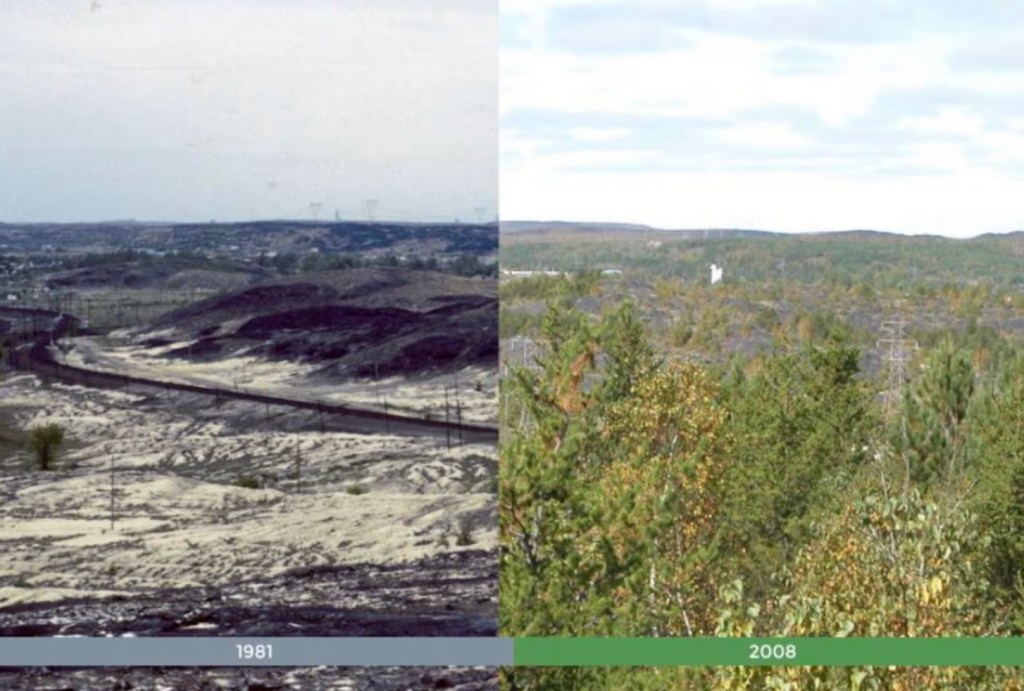
And yet, even in this unlikely place, Jason experienced one of the most ambitious ecological restoration efforts in North America. Schoolchildren helped plant millions of trees. “We’d go on field trips and spend the day planting,” he said. “Years later you’d look at those hills and think, I did that.”
But then came a moment that made a lasting impression: a developer purchased land he had helped plant trees on and cut them down to build a strip mall. “It was very upsetting,” he told me. “That they would undo work that even schoolchildren did. I thought, there must be a better way.” That conflict between restoration and destruction must have lodged itself deep.
A Different Way to Live
Fortunately, Jason experienced something very different every summer: a one-acre island in the Ottawa River where his aunt and uncle had built a hand-crafted cottage out of river rock and salvaged materials. It was simplicity in its purest form, with kerosene lamps, canoes, no electricity, and nights lit by the brilliance of the northern sky.
“For me, it was the most magical place in the world,” he said. “You got up with the sun. You went to bed when it got dark. You were in your own little ecosystem.”
He experienced what a living building really feels like long before he had the language for it.
Becoming an Architect
Jason knew he wanted to be an architect early. He drew castles, built with Legos, and took drafting in high school — “all the cliché things future architects do,” he admitted with a laugh. “I knew I wanted to be a different type of architect,” he told me. “One who worked with nature.” The University of Oregon became his destination because his father had gotten one of his degrees there and his parents had fallen in love with Oregon. As it turned out, it was the best school anywhere around the burgeoning topic of sustainable design.
“There were some incredible professors there, John Reynolds, Charlie Brown, Chuck Rush, and others who were teaching about green buildings. So, I quickly latched onto them.” There was a solar information center. He volunteered at a student-led solar research center, eventually becoming its director, and even took on solar consulting work in the community. “It was fantastic!” he said.
His thesis explored a question that would define his career: What is a truly sustainable building?
Kansas City and the Birth of “Living Buildings”
Right after graduation, one of the founders of the green building movement, Bob Berkebile, was looking for a sidekick steeped in sustainable design. He reached out to Oregon, and Jason’s professor recommended him. Berkebile hired him over the phone. Jason packed up and drove to Kansas City. “I’m suddenly working on the greenest projects in the country with Bob Berkebile!” he recalled.
Jason ended up on a project funded by the federal government in Bozeman, Montana. “It needed a name. I had seen the word ‘living’ used for ‘Living Machine’ (ecological waste treatment plants) and liked it, but didn’t like it paired with the word ‘machine.’ So, I finally came up with ‘living building.’” Jason published his first article about living buildings soon after, then another, and then one with Bob.
When LEED emerged as a green building certification, the light bulb went off about going beyond the philosophy of living buildings as concept and actually creating a certifiable system. A defining moment in his life arrived. “I wrote a 30-page manifesto, which was basically the blueprint for the Living Building Challenge.”
But he recognized a problem. He was now the youngest partner at a prominent firm, yet he realized the firm wasn’t the right platform for growing his idea. “I knew it was a big idea that couldn’t belong to a private company,” he said. “It had to belong to the world.”
So, in 2006 he quit his job, took a pay cut, moved to Bainbridge Island, and became CEO of the Cascadia Region Green Building Council. Later that year he launched the Living Building Challenge. The rest is history. It has grown continuously for 19 years, is now managed by the International Living Future Institute, and has been used for hundreds of projects around the world, including the six-story Bullitt Center in Seattle and his own home on Bainbridge Island, called Heron Hall.
What Drives Him: The Why
As compelling as Jason’s story is, what truly matters is why he does the work.
Jason does not subscribe to any particular religious tradition, but spirituality permeates his thinking. He has collaborated with First Nations leaders, Muslim architects, Christian theologians at Yale, and Māori designers in New Zealand. Again and again, he sees people finding echoes of their own faith or ancestral wisdom in the Living Building principles. “People read their beliefs into it,” he said. “It’s about interconnectedness. It’s about building for life.”
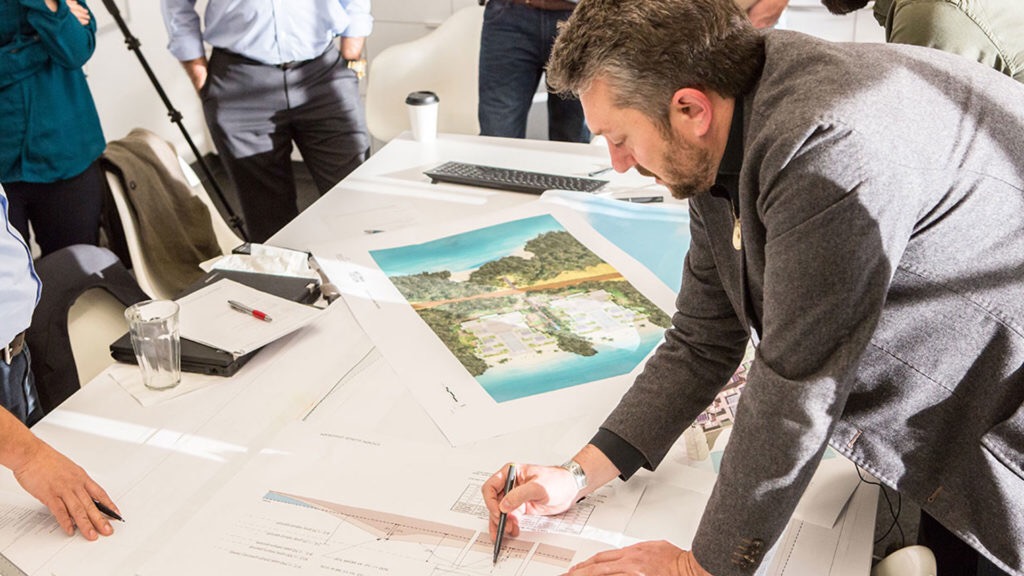
This view — that buildings are participants in ecosystems — is front and center on the McLennan Design website, which says “creating conditions for life to thrive for all beings.” At one point he summarized his fundamental challenge with a simple question: “How do you build humanity’s largest artifacts, our buildings and cities, within a philosophical context of caring for creation?”
Jason also subscribes to a gardener’s philosophy. He gardens. He raises chickens. He tends trees. He walks the forests of Bainbridge Island, boats in the San Juans, and cares for an off-grid cabin like the one from his childhood. “When you’re gardening,” he told me, “you’re not the creator. You’re the steward. You’re helping life along.”
But what stood out to me more than anything else he said was the idea that we are meant to give more than we take. Regenerative or net-positive are words for that. He emphasized that “humans must move beyond doing less harm to actively contributing positively to the environment.” This simple but powerful idea also applies to people, communities, organizations, and businesses.
“This is a moral issue,” he told me. “And I think it is a spiritual issue.”
Looking Forward
Toward the end of our hour, we talked about the future and about his children (three biological and one stepson). “I mean, unfortunately, they’re not inheriting the kind of environment that we grew up with.” He likes to ask audiences, “What kind of cities will our children live in?” He mentioned a design competition he launched in 2009 with designers from around the world imagining positive futures instead of dystopian ones. The goal, he said, was to offer an antidote to the Blade Runner images we’ve all seen.
Behind Jason’s books, buildings, and global leadership is a simple conviction born from childhood memories of destruction and renewal: we can build in ways that restore, replenish, and honor the systems we depend on. Listening to him, it’s impossible not to believe that too.
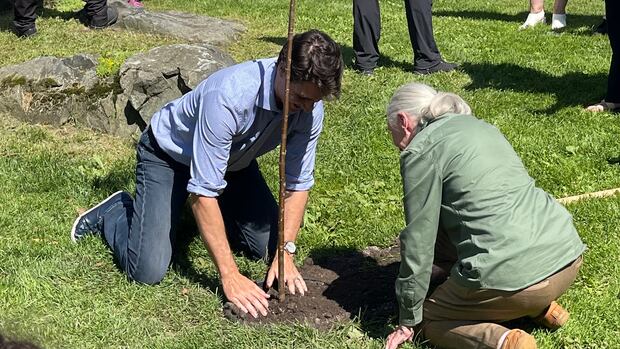
In 2022, in a fitting full-circle moment, noted scientist Jane Goodall and Prime Minister Justin Trudeau went to Sudbury to help plant the ten-millionth tree.
Resources and Links
McLennan Design, now part of Perkins & Will
International Living Future Institute
Jason’s new book – The Magic of Imperfection (Sept. 2025)
“Design guru returns to Sudbury for hometown accolades“
Seattle Bullitt Center – Greenest commercial building in the world
Heron Hall on Bainbridge Island – Jason’s home
 The Ethos Project
Leave a comment