Moving through nature offers connection
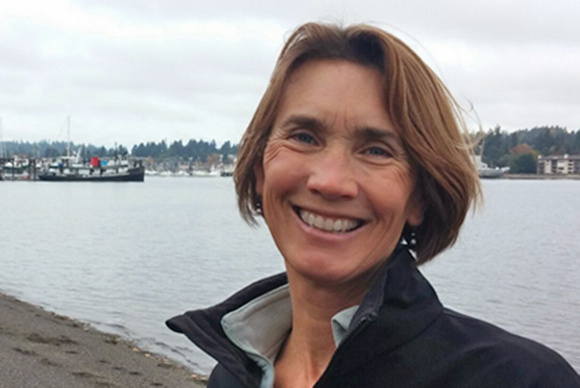
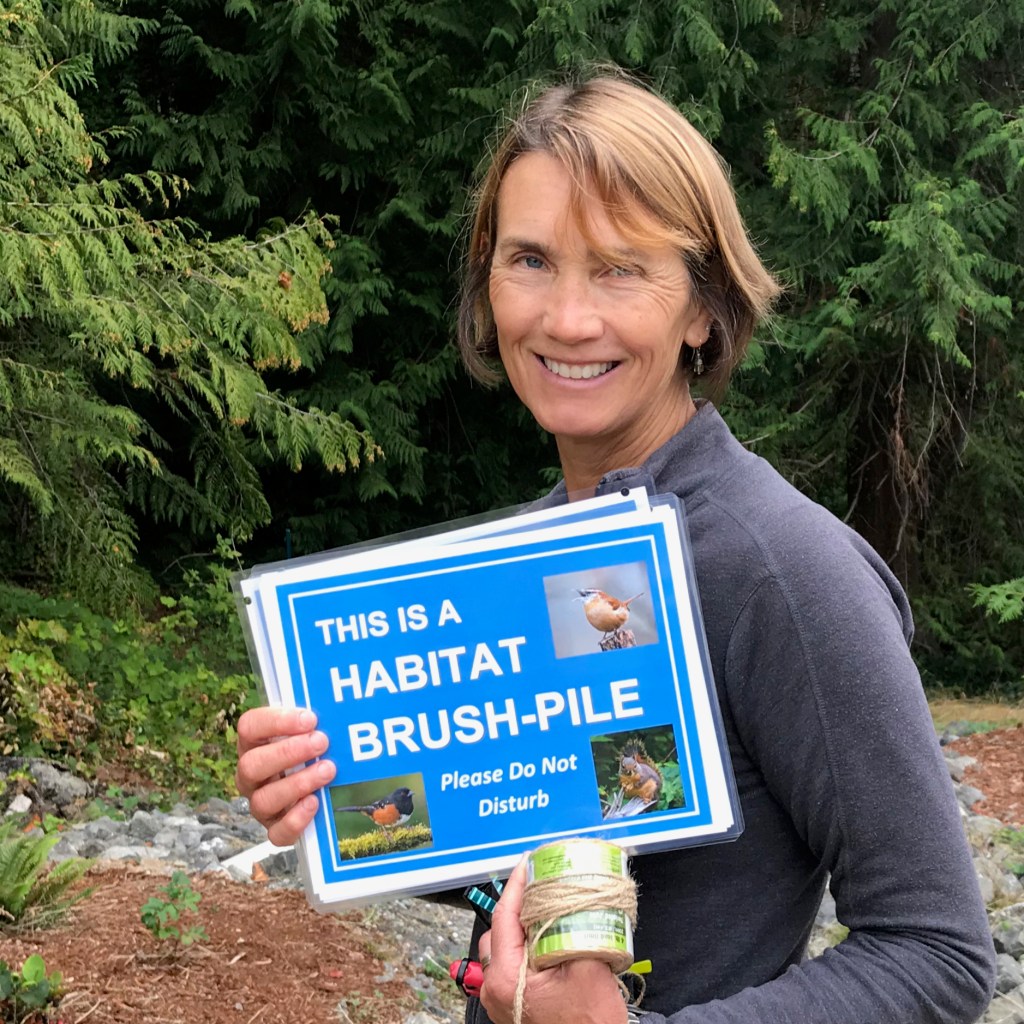
Barb Trafton has spent more than 30 years conserving land and creating trails on Bainbridge Island—first as a volunteer, then on the Land Trust Board, as the Parks Foundation’s first Executive Director, and now as its Trails Director. In recognition of her long-running efforts, she was named Environmentalist of the Year at the island’s annual Environmental Conference in 2022. She’s a bit squeamish about being called out as an environmentalist, saying her “actions are every day in a common sort of way.” But it doesn’t seem common to everyone else. Those who’ve worked with her are astounded by her endless energy and excitement for each new opportunity and project. Curious about the deeper motivations behind that drive, I sat down with her in October 2025.
Roots in Maine
Barb grew up in Auburn, Maine, a “tired” mill town on the Androscoggin River, as the eighth of nine siblings. Growing up she was surrounded by the wild beauty of the region’s mountains, rivers, and coastline. Her mother often reminded the kids to “leave a place better than you found it.” Barb laughed remembering how they’d roll their eyes, “but the message stuck.” Her father, a lawyer and civic leader who ran for governor with environmental issues central to his platform, shared a similar sense of responsibility toward place.
The family spent weekends skiing and climbing in the White Mountains or exploring Maine’s wild coast. Barb also attended a summer camp where Sunday gatherings took place under a canopy of pines, filled with music and readings. “The outdoors spoke to me in ways church never did,” she said. These early experiences instilled in her a reverence for land and water. “I learned that if you love a place, you care for it. It’s really that simple.”
Yet the landscape she loved also revealed how vulnerable it could be. The Androscoggin River, which ran through town, was “frothy and stained with chemicals” from textile and paper mills. “It was disgusting,” she recalled. “You could smell it blocks away.” But her father pointed out how the river was gradually recovering thanks to the Clean Water Act. “It taught me that people can make a mess, but they can also fix it.”
The Spark: Bates-Morse Mountain
If there was one moment that crystalized Barb’s calling, it came when she was 13 years old. Her father, then on the board of Bates College, helped the school acquire the Bates-Morse Mountain Conservation Area—more than 600 acres of shoreline and coastal habitat preserved in perpetuity.
“I was invited to join him for the opening clambake,” she said. “I couldn’t believe that such a place could be saved forever, and providing access to the most beautiful beach in Maine!” That moment left a deep impression. She estimates she has visited that stretch of coast more than 100 times. “It’s sacred ground to me,” she said. “Part of my heart will always be there.”
Berkeley and a Broader View
After college, Barb studied art at Princeton, spent a year in Italy, and settled in Boston, where she met her husband Bruce through rowing. When his coaching career brought them to Berkeley, she encountered a different model of conservation that added to her thinking.
“Boston was beautiful, but you had to drive far to find real open space,” she said. “In Berkeley, you’re in a major urban area, and yet surrounded by nature.” The East Bay’s extensive regional park system with rolling hills, oak woodlands, and miles of trails truly impressed her. “It changed the way I thought about conservation,” Barb explained. “All that preserved land didn’t just protect the environment, it also changed the quality of people’s lives. It made me realize the conservation is about access too, and giving people a way to connect.”
That revelation would be a cornerstone of her later work on Bainbridge Island.
Blakely Harbor and the Power of Community
When the Trafton-Beall family moved to Bainbridge in the early 1990s, the Port Blakely Company proposed building a thousand homes at Blakely Harbor. Barb attended a community meeting where people asked what they could do to protect the area. “I didn’t know anything about conservation here, but I thought—why not try?”
That meeting launched a multi-year grassroots effort that culminated in preserving Blakely Harbor Park for the public. Barb joined the volunteer fundraising group. “It was amazing,” she said. “Some people gave huge gifts; others sent kids with their piggy banks full of change. It showed me that everyone can participate, whatever their capacity.” It was a turning point for Barb and the island. “It made me believe in community as a force for change.”
Soon after, she joined the Bainbridge Island Land Trust Board, focusing on projects that expanded public parks and access. Later she became the first executive director of the Bainbridge Island Parks Foundation. “Conservation easements are valuable,” she explained, “but parks connect people directly to nature. Public lands build a two-way relationship between people and place.”
Her leadership has spanned everything from playground projects to park acquisitions to a youth stewardship program that hires local teens for restoration work—“when they’re paid for conservation work, they understand that caring for the earth is real work, and that it matters.” But her proudest accomplishment is adding ten miles of new trails on Bainbridge, and she hopes to keep adding more. Each mile enabling connection with nature and each other.
Movement, Connection, and Care
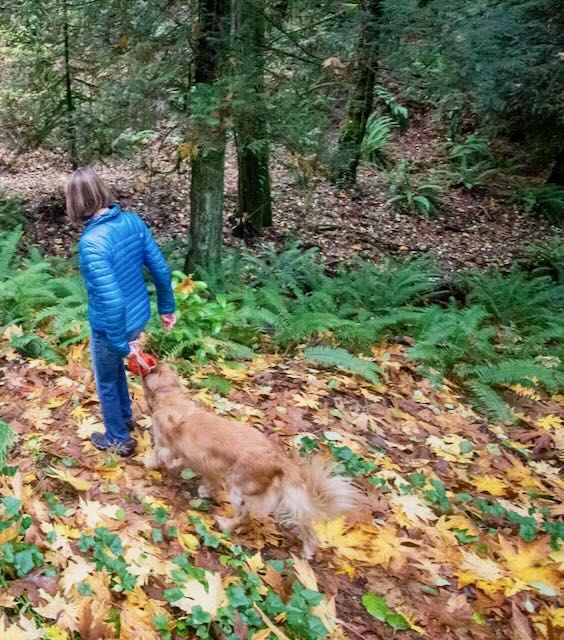
A rower since high school and a daily yoga practitioner, Barb has always found meaning in physical movement. But it is moving through nature—not simply being outdoors—that provides her greatest sense of connection.
“It’s not just being outside,” she said. “It’s moving through outside. The light changes, the smells shift, you notice the smallest things. That’s when I feel most alive.”
This philosophy underpins her devotion to trail-building. “Trails let people move through nature,” she explained. “They’re not just paths; they’re invitations to connect—with the land, with each other, with ourselves.”
Over the years, her environmentalism has become a bit spiritual as well as practical. “I don’t necessarily believe in a higher being,” she said. “But I believe in life and in paying attention to it. Everything we need is right here on this planet. We just have to take care of it.”
Our Earth – The Most Beautiful Place
As our conversation ended, Barb recalled watching Star Trek as a child with her siblings. “They’d land on these strange, barren planets,” she said, laughing. “And very occasionally on an astoundingly beautiful forested one, which was, of course, filmed on our own planet. I remember thinking, ‘Why would anyone leave Earth? It’s already the most beautiful place imaginable.’”
That sense of wonder still grounds her work. Whether she’s swimming in Blakely Harbor or sketching new lines on a trail map, she sees each project as part of the same continuum—a shared effort to “leave a place better than we found it.”
“There are moments,” she said, “when I’m swimming in Blakely Harbor and I turn toward the shoreline and think this could have been so different. And I just feel so grateful.”
For Barb Trafton, caring for the earth isn’t a grand crusade. It’s a way of being—moving through the world with care, connection, and gratitude.
Resources & Links
Blakely Harbor Park: building an environmental success
 The Ethos Project
Leave a comment